What Is the "Awakening" in Autism — and Why Does Behavior Get Worse Before It Gets Better?
May 31, 20265 min read
If you've recently started your child on the Nemechek Protocol and noticed that things seem to be getting worse before they get better — your child is more anxious, sleeping less, stimming more, or harder to manage — you may be witnessing what Dr. Nemechek calls the Awakening.
It's one of the most talked-about, most misunderstood phenomena in the protocol. This article explains exactly what it is, why it happens, and what to expect.
What Is the Awakening?
The Awakening is a phase that many children with autism go through after starting the Nemechek Protocol. It's characterized by a temporary increase in certain behaviors — more anxiety, more stimming, difficulty sleeping, and occasionally increased aggression or self-stimulatory behavior — that can alarm parents who were expecting improvement.
Importantly, the Awakening is specific to autism. Children with ADD, ADHD, or simple developmental delay typically don't experience it. Understanding why requires a brief look at what makes autism neurologically distinct from those other conditions.
The Role of Propionic Acid
At the heart of the Awakening is a chemical called propionic acid (PPA) — a short-chain fatty acid produced by an overgrowth of certain gut bacteria. Children with autism consistently show elevated levels of PPA, and this chemical has a profound effect on the brain.
Dr. Nemechek describes propionic acid as acting like a sedative — and in some respects, a mild psychotropic compound. It's what causes the characteristic "zoned out" appearance many autistic children have: the blank staring, the self-isolation, the hours spent watching ceiling fans or playing with fingers, the sense that the child is somehow absent even when they're in the room.
In other words, many of the behaviors we associate with autism aren't just the result of neurological damage. They're also the result of a child whose brain is being chemically sedated — continuously — by bacteria in their gut.
What Happens When the Protocol Starts
When a child begins the Nemechek Protocol, the inulin (or rifaximin, in cases where the antibiotic is used) begins to rebalance the gut bacteria. As bacterial overgrowth is brought under control, propionic acid production drops.
And then something remarkable happens: the child wakes up.
Parents often describe this moment with striking clarity. Their child suddenly makes direct eye contact. They reach for a parent's hand and try to lead them somewhere. They point at things they want. They engage with siblings and respond to their name. The sedative has lifted, and the child behind the autism is more visible than they've been in years — sometimes ever.
But here's the paradox: at the same time the child is becoming more present, their behavior can become more difficult. This is the Awakening.
Why Behavior Can Worsen First
Three things happen simultaneously when propionic acid drops:
1. The fight-or-flight system activates. Children with autism have significant autonomic nervous system (ANS) dysfunction — the system that regulates how we respond to stress, modulate emotions, and maintain calm. When the sedative effect of PPA lifts, the ANS doesn't suddenly normalize. The child is now more alert and aware, but their ability to regulate their emotional responses is still impaired. The result is a flood of noradrenaline — the fight-or-flight hormone — that creates anxiety, hyperarousal, and agitation.
2. The child becomes aware of their situation. As cognitive clarity returns, children begin to perceive the world more vividly. This newfound awareness itself can be distressing. They're registering things they couldn't fully process before, and without the tools to regulate that input, distress escalates.
3. Emotional modulation remains broken. Under normal circumstances, the autonomic nervous system acts as a volume control for our emotional responses — amplifying reactions when necessary and dampening them when the threat has passed. In children with ANS dysfunction, this control is absent. Small stressors produce outsized reactions. What should be a minor frustration becomes a meltdown. What should be mild anxiety becomes panic.
Dr. Nemechek uses the analogy of driving a car: a healthy ANS is like having responsive brakes and acceleration — you react to hazards, then calm down and continue. A broken ANS means you're either constantly hitting the brakes in fear or unable to slow down at all, regardless of what's actually happening on the road.
This is why the Awakening can manifest as increased stimming, sleep disruption, self-harm, aggression, or a child who becomes a flight risk at the park. These aren't signs that the protocol isn't working. They're signs that the sedative has lifted and the brain is in the early stages of recalibrating.
How Long Does the Awakening Last?
For most families, the most intense phase of the Awakening settles down within four to six weeks. Parents typically report that behaviors begin to smooth out and the child's increased alertness starts to translate into genuine developmental gains rather than distress.
If significant behavioral intensity persists beyond two months, Dr. Nemechek recommends reviewing the protocol — specifically, ensuring that fish oil and olive oil doses are correctly calibrated for the child's current weight. In many cases, bumping up these doses is what's needed to move through the plateau and into the repair phase.
A Note on Inulin Dosing During the Awakening
Some parents, faced with an intense Awakening, instinctively reduce the inulin dose to calm things down. This does work — but it's worth understanding why.
Less inulin means less control over bacterial overgrowth, which means propionic acid levels rise again, which means the sedative effect partially returns and the child calms. It's not that the inulin itself was causing the problem. It's that you've re-sedated the child by allowing PPA to climb back up.
Starting at a lower inulin dose and gradually increasing is a reasonable strategy for families who need to manage the intensity of the Awakening. Just be aware of the mechanism — you're managing PPA levels, not reacting to the inulin itself.
It's also worth noting that the Awakening occurs identically in children treated with rifaximin rather than inulin. The trigger is PPA reduction, regardless of how that reduction is achieved.
What the Awakening Actually Represents
The Awakening is, at its core, a sign that the protocol is working. The brain is emerging from a chemical fog. The child's increased engagement — however chaotic it may feel in the moment — represents genuine neurological movement in the right direction.
What comes next is the repair phase. As the Nemechek Protocol continues, the brain begins to rebuild the mechanisms that were damaged by cumulative neuroinflammation. Autonomic regulation improves. Emotional modulation becomes more reliable. Language, social connection, and cognitive function follow — often gradually, sometimes in sudden leaps.
The Awakening is not the destination. It's the door.
Related resources:
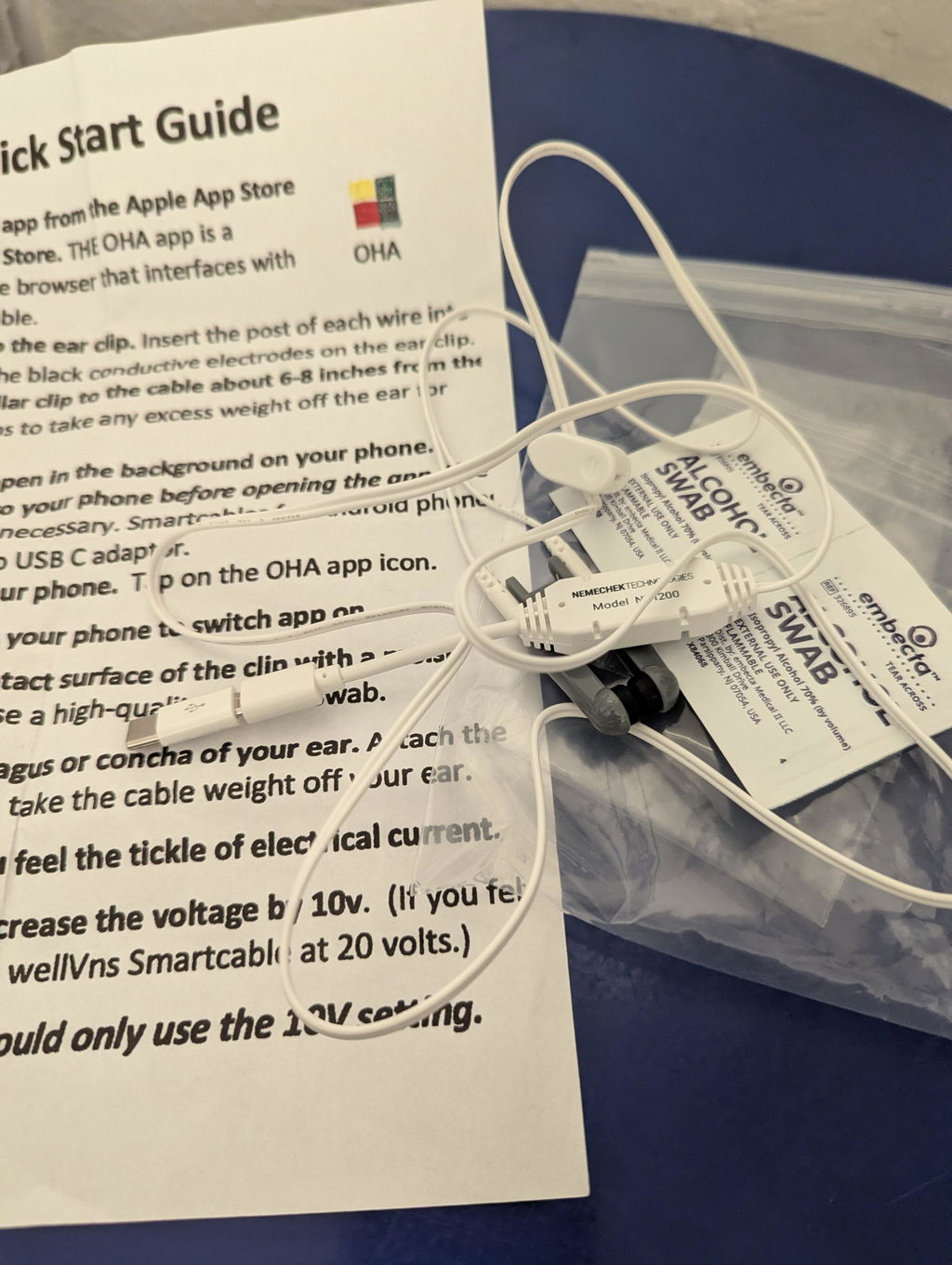
Vitality Smartcable — vagus nerve stimulation to support autonomic recovery and accelerate the repair phase
FAQs — common questions about the protocol and the Awakening
Contact Us — reach our support team with questions
Medical Disclaimer: The information in this article is for educational purposes only and is not intended as medical advice. The Nemechek Protocol is not a cure for autism or any other medical condition. Please consult with a qualified healthcare provider before making changes to your child's health regimen. Individual results vary.
SUBSCRIBE
Sign up to get the latest on sales, product releases, and more…
Vitality Smartcable was easy to set up. The app opened up as soon as I plugged into my phone. Five minutes of use throughout the day is very convenient. Soon I'll get the funk out of my depression from losing my job, losing my sister to breast cancer, and losing my dog. Every bit of medical help is appreciated.
They work just like the original one I received with the cable. My only complaint is that I was unable to get them a year ago when the first one failed. Thanks for making them available.